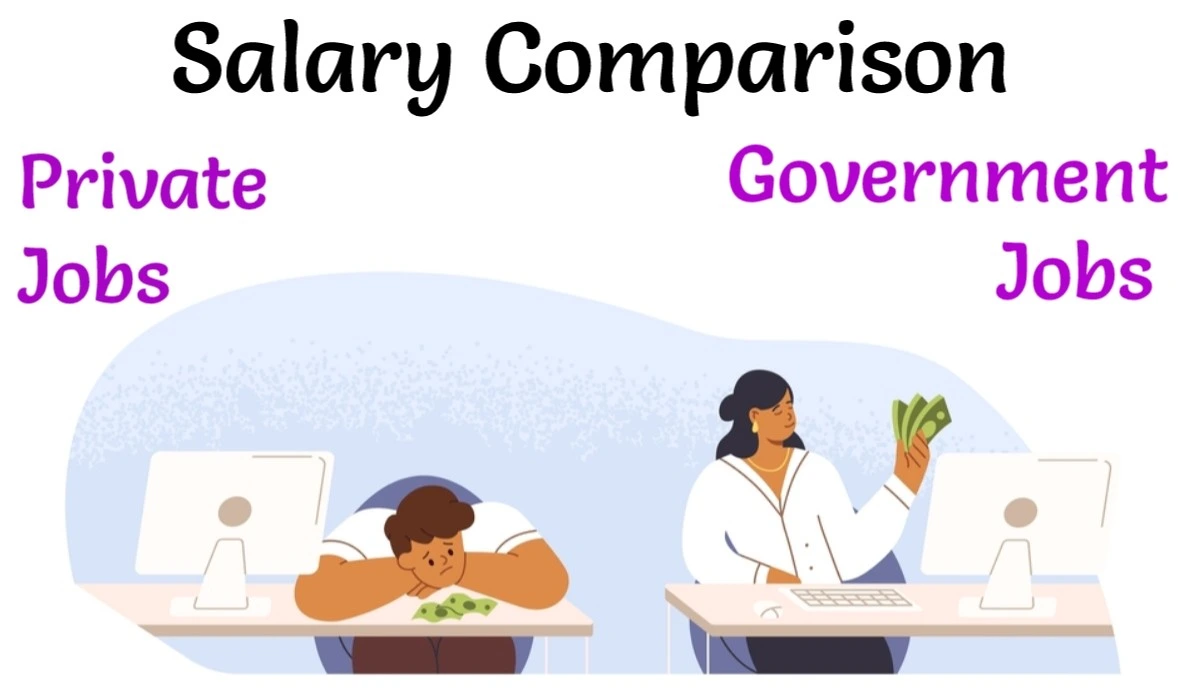
The 8th Pay Commission Salary Hike is expected to bring a major salary hike for Central Government employees starting from January 2026.
After the new pay structure comes into effect, salaries of government workers may rise by 30%–35%, making them equal to — or even higher than — many private and IT sector jobs in India.
Let’s understand how the new 8th Pay Commission salaries compare with the private sector.
What is the 8th Pay Commission?
The 8th Pay Commission is a special panel formed by the Government of India to revise salaries, allowances, and pensions of all Central Government employees and pensioners.
It comes after the 7th Pay Commission, which was implemented in 2016.
The next one — the 8th CPC — is likely to be implemented from January 1, 2026, with a new pay matrix and higher fitment factor (expected between 1.83× to 2.46×).
Big Jump in Salary for Government Jobs
After this hike, even employees in lower pay levels (like Level 4–7) could get a take-home salary of ₹70,000–₹1,00,000 per month, including Dearness Allowance (DA), House Rent Allowance (HRA), and other benefits.
Example: A Level 6 employee with a current basic pay of ₹35,400 may see it rise to ₹65,000–₹87,000 after the 8th Pay Commission Salary Hike— a huge jump compared to most entry-level private jobs.
Also Read: Top 10 Demands of Government Employees ahead of 8th Pay Commission Salary Hike
Government Jobs vs Private/IT Sector Salaries (2026 Projection)
| Job Type | Before 8th CPC (2025) | After 8th CPC (2026) | Private/IT Sector (Average) |
|---|---|---|---|
| Clerk / Assistant (Level 4–5) | ₹45,000 – ₹55,000 | ₹70,000 – ₹80,000 | ₹25,000 – ₹40,000 |
| School Teacher (TGT / PGT) | ₹60,000 – ₹75,000 | ₹90,000 – ₹1,10,000 | ₹30,000 – ₹45,000 |
| Junior Engineer / Section Officer | ₹75,000 – ₹1,00,000 | ₹1,20,000 – ₹1,40,000 | ₹50,000 – ₹90,000 |
| Senior Govt Officer (Level 11–12) | ₹1,20,000 – ₹1,40,000 | ₹1,80,000 – ₹2,10,000 | ₹1,00,000 – ₹1,80,000 |
| IT Project Manager (Private) | — | — | ₹1,50,000 – ₹3,00,000 (Top firms only) |
Why Government Jobs Look More Rewarding Now
- Fixed annual increment (3%)
Every year, salaries automatically rise — unlike many private jobs. - Regular DA hikes twice a year
To adjust for inflation, DA is revised every 6 months. - Strong job security
No layoffs or pay cuts, even during economic slowdown. - Retirement benefits
Includes pension, gratuity, LTC, and medical benefits. - Less stress, more stability
Compared to high-pressure IT and corporate environments.
Private Jobs Still Win in One Area
Private and IT sector professionals still have an edge in:
- Faster promotions
- Higher global opportunities
- Performance-based bonuses
However, only top performers or high-level managers earn more than government officers after the 8th Pay Commission.
8th Pay Commission vs Private Sector: Salary, Benefits, and Growth Compared
The new 8th Pay Commission Salary Hike (expected from January 2026) are likely to match or even surpass many jobs in the private and IT sectors, especially at the entry and mid-level.
Here’s a simple breakdown:
Key Takeaways
The 8th Pay Commission Salary Hike will make government jobs financially more attractive than ever before.
With steady income, rising allowances, and strong retirement benefits, many mid-level government employees will earn more than private-sector professionals in 2026 and beyond.
For young job seekers, this means government jobs are becoming a blend of security and good income — something rare in today’s private sector.
Can you be more specific about the content of your article? After reading it, I still have some doubts. Hope you can help me.
[…] Also Read: Salary Comparison in Private Jobs vs Government Jobs after 8th Pay Commission […]
[…] 8th Pay Commission Salary vs Private Jobs: Are Government Employees Now Earning More? […]